Do you prefer reading an e-book or a physical version? It might be a surprise, but for most people, old school print on paper still wins.
Publishers of books in all formats made almost $26 billion in revenue last year in the U.S., with print making up $22.6 billion and e-books taking $2.04 billion, according to the Association of American Publishers’ annual report 2019. Those figures include trade and educational books, as well as fiction.
While digital media has disrupted other industries such as news publishing and the music business, people still love to own physical books, according to Meryl Halls, managing director of the Booksellers’ Association in the U.K.
“I think the e-book bubble has burst somewhat, sales are flattening off, I think the physical object is very appealing. Publishers are producing incredibly gorgeous books, so the cover designs are often gorgeous, they’re beautiful objects,” she told CNBC.
People love to display what they’ve read, she added. “The book lover loves to have a record of what they’ve read, and it’s about signaling to the rest of the world. It’s about decorating your home, it’s about collecting, I guess, because people are completists aren’t they, they want to have that to indicate about themselves.”
Genres that do well in print include nature, cookery and children’s books, while people prefer to read crime, romantic novels and thrillers via e-reader, according to Nielsen Book International.
It’s more than a decade since Amazon launched the Kindle, and for Halls, there is also a hunger for information and a desire to escape the screen. “It’s partly the political landscape, people are looking for escape, but they are also looking for information. So, they are coming to print for a whole, quite a complex mess of reasons and I think … it’s harder to have an emotional relationship with what you’re reading if it’s on an e-reader.”
While millennials are sometimes blamed for killing industries, it’s actually younger people who appear to be popularizing print. Sixty-three percent of physical book sales in the U.K. are to people under the age of 44, while 52% of e-book sales are to those over 45, according to Nielsen.
It’s a similar picture in the U.S., where 75% of people aged 18 to 29 claimed to have read a physical book in 2017, higher than the average of 67%, according to Pew Research.
Not every author is a fan of e-books: “The Catcher in the Rye” author JD Salinger famously resisted digital media and information sharing online, but in August his estate agreed to publish his work as e-books for the first time. Salinger’s son Matt said a letter from a woman with a hand-related disability who found physical books hard to handle had convinced him to make his books available, according to a report in the Guardian.
As for the future of books, all formats will continue to be in demand, according to Jacks Thomas, director of The London Book Fair. “People always need knowledge and people always need stories, so from that point of view, the very core of the book industry I am sure is very strong. I’ll be really interested to see what the classroom of the future is because I think that will dictate a huge amount as to how future generations will engage with the written word … Or will it be the spoken word, but it will still be stories and it will still be knowledge, those aspects of books will still need to be curated. So, I think that the book, in whatever format, has a strong future,” she told CNBC.
Group 2
Cheter John L. Tanguilan
Demah Nea Viloria Agati
Kristine Joy Sanchez
John Dexter Urbi
Angelique Unel
Waste Management is arising as a major problem in almost all countries. In order to have a healthy life and a clean environment, managing of waste materials is very important. Imparting knowledge on waste management is the need of the hour. So, what is meant by waste management?
Waste Management refers to the process of removing waste and this includes each and every processes right from the collection of waste materials, transporting it, treating them and its disposal. Key factors such as increase in population, industrialization, urbanization etc., add to the excess generation of wastes. The percentage of waste generated is high compared to the percentage of disposal. Although waste management is a global issue, the worst affected are the developing countries.
THE PROBLEM OF COMMUNIT
There are different types of waste produced such as industrial waste, agricultural waste, house hold waste, waste from health care centers, organic waste and toxic wastes. These wastes are also in different forms such as solid, liquid and gas. The method of waste management differs according to the type of waste materials.
In modern methods of waste management, importance is given not only to clear waste but to convert them into useful substances.
Some of the common methods of clearing waste are stated below:
i. The most common method of disposing waste is throwing them in landfills which is then buried. This is one of the oldest techniques and this method helps in the removal of bad odor. But many countries are currently reconsidering this method as landfills are found to increase global warming.
ii. Recycling is one of the best method for waste management. In this process, waste materials are recycled and energy resources like fuel, electricity etc., are generated.
The electrical Energy is one of the important thing in different aspects of today’s community, However in other nation, tons of trash can make an electrical energy, but How? They collect all the trash, process it in extremely hot trash burner, then generate electrical energy. In the small country of Singapore the solid trash only last for short period of time, How? Well let’s find out and watch this short video:
iii. Composting is another process where waste materials are turned into useful manures. This method is also called the bio-degradation process where the kitchen waste and remains of plants and trees are again converted into manure for plants. The fertility of soil is improved by this process.
iv. Organic waste materials are decomposed by two methods namely Gasification and Pyrolysis. In the Gasification process of waste management, waste materials are exposed to low amount of oxygen and high temperature and in Pyrolysis method no oxygen is used.
v. Non-recyclable waste materials are also converted into fuel, heat or electricity.
Apart from all the above methods, there is one simple method that can be practiced by everyone to reduce waste. Yes, the best way to reduce waste is to create less waste.
Why Waste Management is Important?
Waste management is very important to preserve the health of living beings and also to create a strong environment for the future generation.
Waste Management helps in reducing pollution and by adapting to efficient waste management techniques, emission of gases like Carbon dioxide and Methane from wastes can be reduced to a large extent.
Waste Management helps in the prevention of contagious diseases.
We saw that recycling is a method of waste management and it has a lot of benefits. When products are recycled, there is no need to produce new products which saves raw materials. The energy consumption will also be much less. Another video will show how waste are recycled:
Waste Management is a big industry as it contains various stages and procedures. Human resources are required in large numbers at every stage. Thus waste management as an industry creates several job opportunities. People with less education and skilled labor can also be utilized in high number in this sector.
Proper waste disposal is critical due to the fact that certain types of wastes can be hazardous and can contaminate the environment if not handled properly. These types of waste also have the potential to cause disease or get into water supplies. There are rules and regulations in place for how specific types of waste should be disposed off… more information in:
Waste management is insisted so much because our planet Earth has already started facing the consequences of dumping tons of garbage. The governments and the local civic bodies must create new strategies to reduce waste and should also create awareness among people on the benefits of using eco-friendly products.
Acquired Immune Deficiency Syndrome or better known as is a life-threatening disease. It is one of the most dreaded diseases we are experiencing today. AIDS is caused by HIV or Human Immunodeficiency Virus, which attacks the immune system of the human body. It has, so far, ended more than twenty-nine million lives all over the world. Since its discovery, AIDS has spread around the world like a wildfire.
Genetic research indicates that HIV originated in west-central Africa during the early twentieth century. AIDS was first recognized by the Centres for Disease Control and Prevention (CDC) in 1981 and its cause, HIV infection was identified in the early part of the decade. HIV destroys the WBCs and weakens the human immune system. The weakening of the immune system affects an individual’s ability to fight diseases in time. Since HIV attacks and infects the WBCs of the human body, it lowers the overall immune system of the human body and resulting in the infected individual, vulnerable to any other disease or minor infection. The incubation period for AIDS is much longer as compared to other diseases. It takes around 0-12 years for the symptoms to appear promptly. Few of the common symptoms of AIDS include fever, fatigue, loss of weight, dysentery, swollen nodes, yeast infection, and herpes zoster. HIV majorly transmits in one of the three ways: sexual contact, exposure to infected body fluids or tissues and from mother to child during pregnancy, delivery, or breastfeeding (known as vertical transmission). There is no risk of acquiring HIV if exposed to feces, nasal secretions, saliva, sputum, sweat, tears, urine, or vomit unless these are contaminated with blood. It is possible to be co-infected by more than one strain of HIV, a condition known as HIV super infection. Till date, no treatment or cure is available for curing AIDS, and as a result, it is a life-threatening disease. As a practice by medical practitioners, the best way to curb its spread is antiretroviral therapy or ART. It is a drug therapy which prevents HIV from replicating and hence slows down its progress. It is always advisable to start the treatment at the earliest to minimize the damage to the immune system. But again, it is just a measure and doesn’t guarantee the cure of AIDS.
Life for an individual becomes hell after being tested positive for AIDS. It is not only the disease but also the social stigma and discrimination, feeling of being not loved and being hated acts as a slow poison. We need to instill the belief among them, through our love and care, that the HIV positive patients can still lead a long and healthy life. Though AIDS is a disease, which cannot be cured or eradicated from society, the only solution to AIDS lies in its prevention and awareness. We must have our regular and periodical health checkup so that we don’t fall prey to such deadly diseases. We must also encourage and educate others to do the same. With the widespread awareness about the disease, much fewer adults and children are dying of AIDS. The only way to fight the AIDS disease is through creating awareness.
11- STEM MOLAVE
GROUP 4: Marielle Cobacha, Angelika Tacuboy, Khate Baguingan, Johnel Rubino, and Valery Sumay
by: j. Asayas, Y. Battung, T. Foronda, K. Taruc, A. Ugalino
It is surprising how many scientific discoveries and passing of milestones takes place in just six months. 2019 has been a great year for science so far, and we really hope that the second half will be as fruitful as the first.
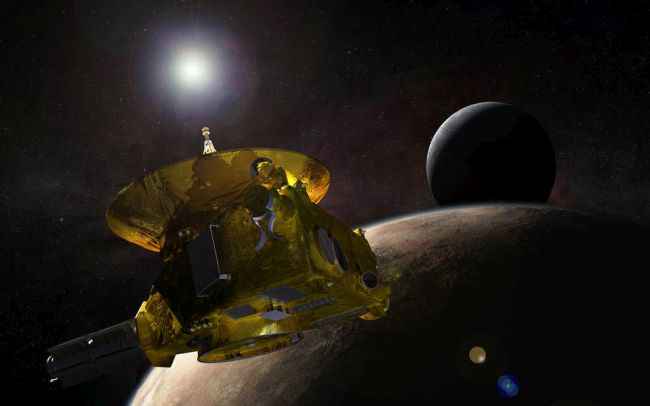
1. NEW HORIZONS
Image: NASA
The New Horizons probe has had a busy year, starting with a flyby of Ultima Thule, a Kuiper Belt Object at a distance of 42 astronomical units from the Sun. The data beamed back from the spacecraft showed that the object was flatter than expected. The science results from the flyby was also published.
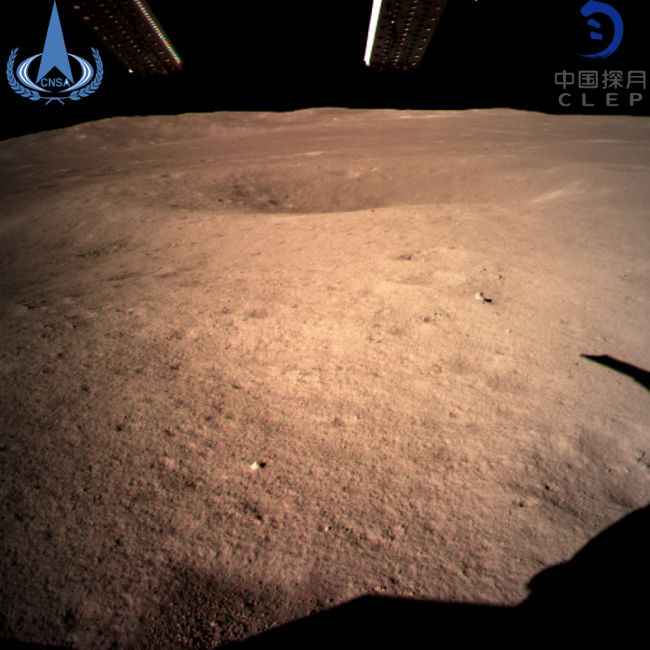
2. CHANG'E 4
Image: CNSA
China’s Chang'e 4 mission became the first to successfully execute a soft landing on the far side of the Moon. This was a technically challenging mission, which had a number of science objectives. These included mineralogical studies of the Moon, observations of the solar corona and studies of cosmic rays.
3. IBM Q SYSTEM ONE
Image: IBM
IBM launched the first commercial quantum computing system, the IBM Q System One. The components of the computing system are cryogenically cooled. This is the first quantum computing system to have escaped the confines of research labs.
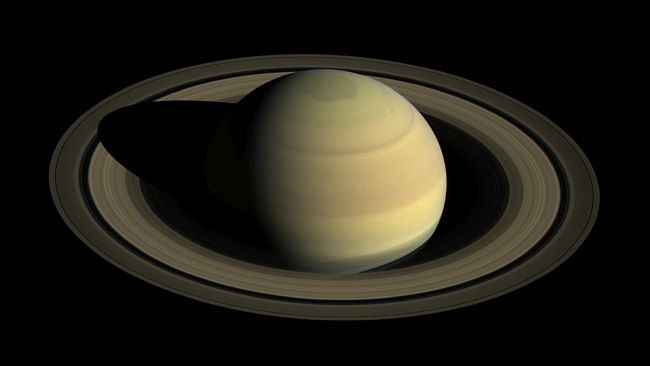
4. THE SATURNIAN DAY
Image: NASA
Planetary scientists finally filled an embarrassing hole in their knowledge of Saturn. No one knew how long a day on Saturn lasted, because there were no permanent visible “land marks” to observe and time. Researchers finally figured out the duration using Cassini’s measurements of the rings. We now know that a day on Saturn lasts 10 hours, 33 minutes and 38 seconds.
5. FRB 180814
The Chime Telescope (Image: McGill University)
Fast Radio Bursts are repeated radio pulses of currently unknown origin. Researchers managed to localise and characterise an FRB for only the second time in 2019, with the object being called FRB 180814. The first one to be located was FRB 121102 in 2012. Discovering these sources will allow researchers to investigate the phenomenon better. The finding has already ruled out any cataclysmic events as the source, and predicted that there are many such objects waiting to be discovered.
6. UNKNOWN HUMAN ANCESTOR
The Denisova Cave. (Image: Демин Алексей Барнаул)
There are six known species of Homo. Homo sapiens have DNA traces of Homo neanderthalensis and Homo denisova. Sapiens have been known to occassinally bear babies with Neanderthals and Denisovans. Researchers used AI to scan through sequenced genomes of Neanderthals and Denisovans, and found something rather surprising. The traces of an unknown species of Homo, that ancient sapiens interbred with.
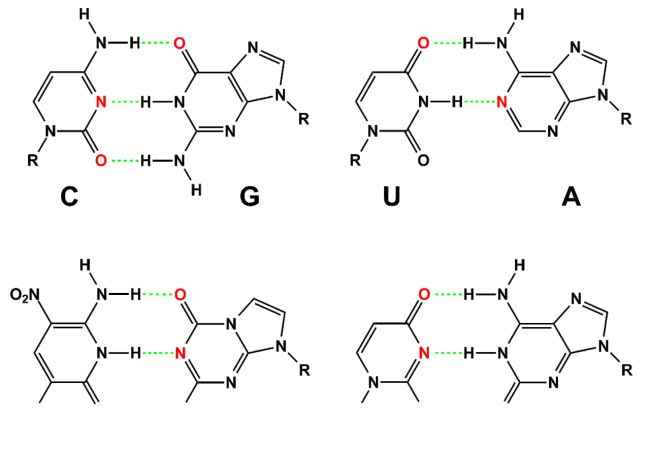
7. HACHIMOJI DNA
Image: Wolfman SF
Researchers announced a new synthetic DNA, a molecule with the characteristic double helix structure, but made up of eight nucleobases - four natural and four artificial. Researchers essentially added four new letters to the existing four in the genetic code. The advancement could allow for improved DNA storage, and has implications for the search for extraterrestrial life.
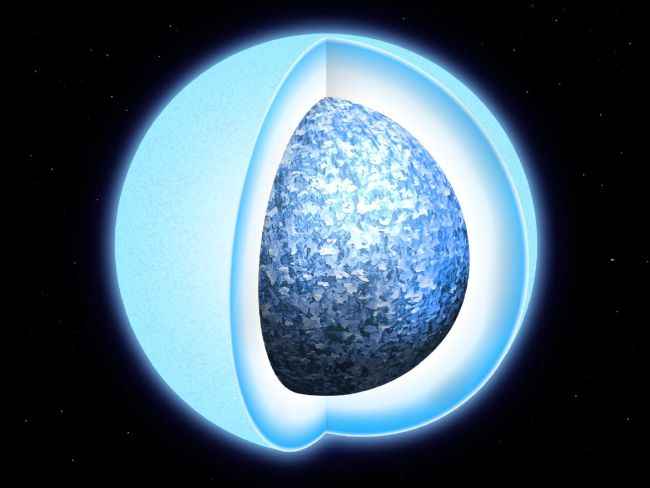
8. CRYSTAL STARS
The interior of a white dwarf star. (Image: University of Warwick)
Researchers found the first direct evidence of a white dwarf star turning into a crystal, and showed that the skies are possibly full of crystalised stars. Our own star is on track to become a crystal after going through a white dwarf stage in another 10 billion years. The finding also implies that some stars are billions of years older than previously believed.
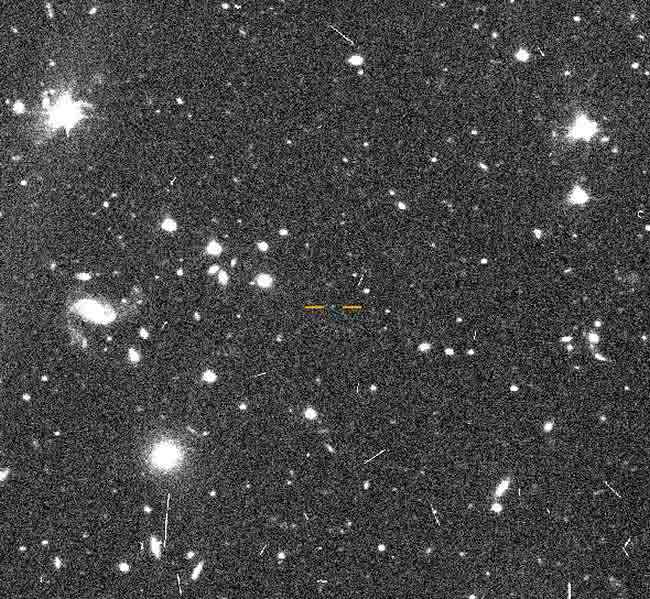
9. FARFAROUT
Image: University of Hawaii
Researchers announced the discovery of the farthest identified object in the Solar System, and called it FarFarOut. The object is at a staggering 15 billion kilometers from the Sun. The discovery was a result of a survey into the edges of the solar system, in an effort to find another large rocky planet hiding out there, called planet 9 or planet X.
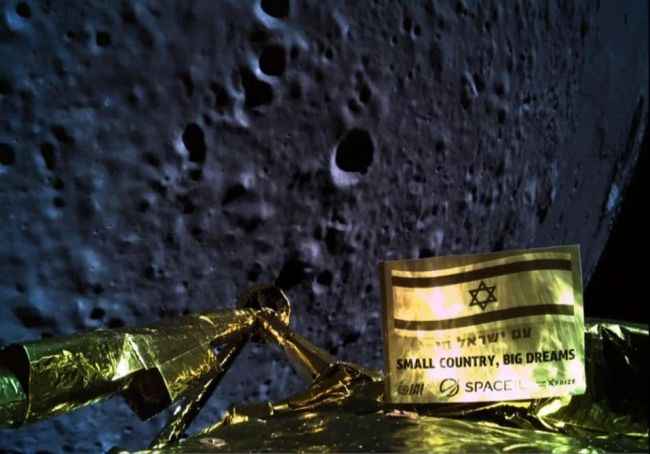
10. BERESHEET PROBE
Image: SpaceIL
The Beresheet Probe was the first private attempt to demonstrate a rover on the Moon. The mission was a collaboration between Israel Aerospace Industries and SpaceIL, and was launched as a secondary payload on a SpaceX vehicle. Unfortunately, the rover crashed into the Moon and was destroyed. The probe still managed to take a fatal selfie before crashing.
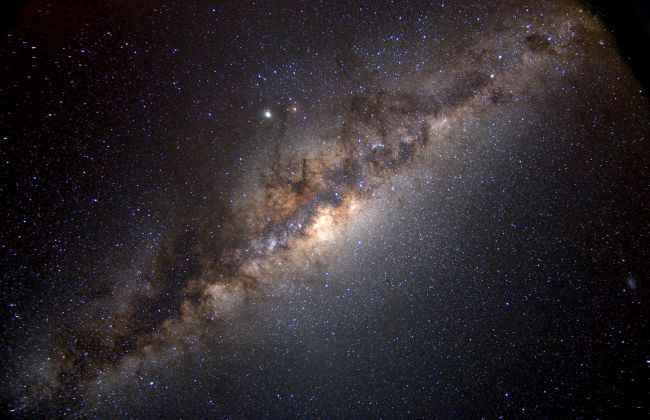
11. WEIGHING THE MILKY WAY
Image: NASA
Researchers managed to weigh the Milky Way galaxy more precisely, and improved previous estimates. According to the latest and most accurate measurements, the Milky Way weighs 1.5 trillion solar masses, which is more than twice the previously estimated figure. 90% of the mass in the Milky Way is attributed to the mysterious substance known as dark matter.
12. THE DAY THE DINOS DIED
Image: Robert DePalma
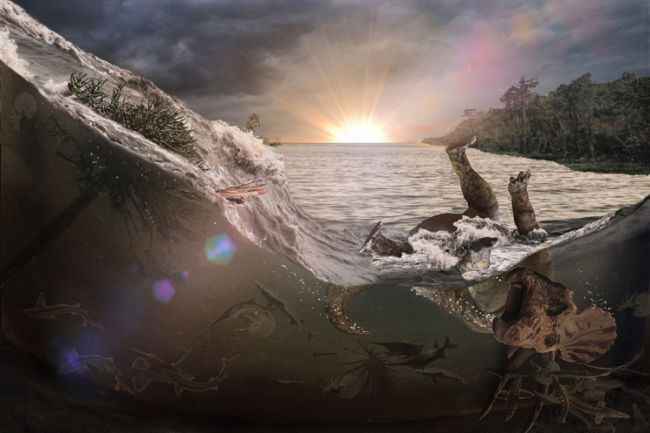
For the first time, researchers identified a fossil formation that preserved the series of events that took place on the day of the Chicxulub meteorite impact. The resulting fossil contained creatures that were thrown up from a river, and subsequently trapped by the falling debris from the sky, that had been ejected by the impact. The rare find is a time capsule, giving researchers a glimpse into the minutes and hours following the historic impact.
13. IMAGING A BLACK HOLE
The Event Horizon Telescope used to image the black hole. (Image: ESO/ L. Calçada)
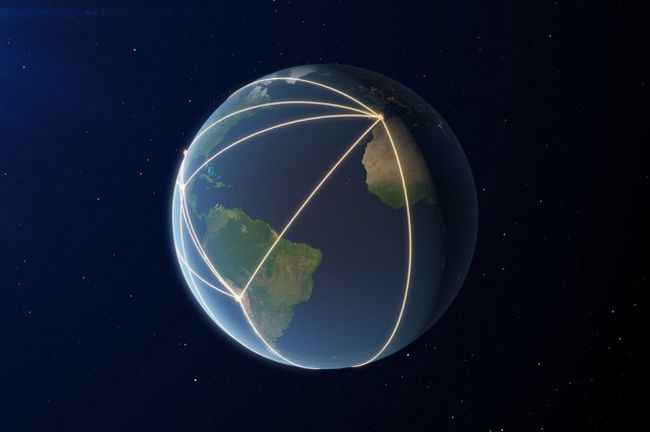
Using an astronomical instrument that had an aperture as big as the Earth, researchers managed to image a black hole for the first time, showing the shadow, or a region around the event horizon. The lighter portions of the image show material rushing towards the Earth, while the darker portions are made up of material moving away. This historical achievement was a massive collaboration by many observatories, universities and scientists from around the world.
Read more: MIT, Boston University, Caltech, JPL, Harvard, University of Chicago, University of Illinois
14. MICE WITH INFRARED EYES
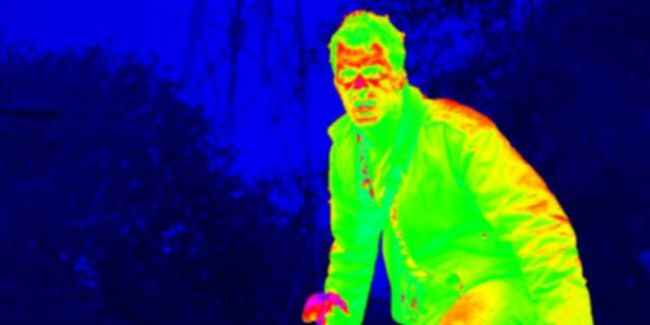
This one is straight out of science fiction. Researchers injected nanoparticles into the eyes of mice, which latched onto the rod and cone cells. The nanoparticles were activated by infrared light, and the information could be processed by the eyes of the mice. Essentially, the researchers gave infrared vision to mice. The procedure had minimal side effects, and a single injection lasted for 10 weeks. If the researchers are looking for human test subjects, sign us up!
15. FUNGI FOUND LAND FIRST
Image: Martin R Smith
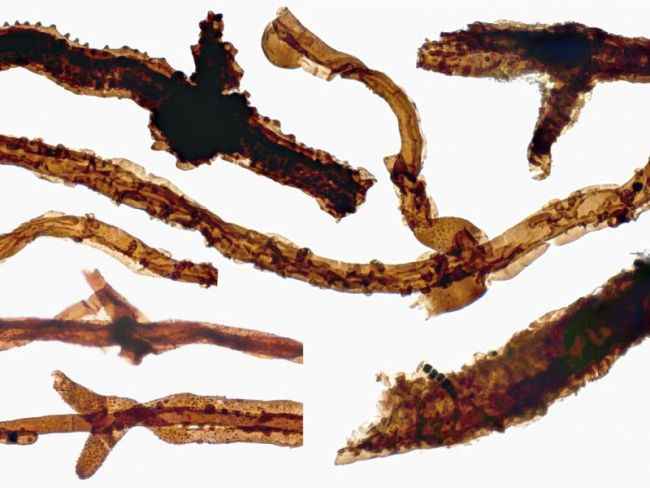
The evidence of the fragile fungus is rare in the fossil record. It has long been believed that the first life to spread to land were freshwater plants. This apparently happened during the cambrian explosion some 430 million years ago. Now, researchers have found microfossil evidence of a fungus that colonised land, 1 billion years ago. The fungus may have had a role to play in life migrating from the seas to land.
16. SYNTHETIC LIFE
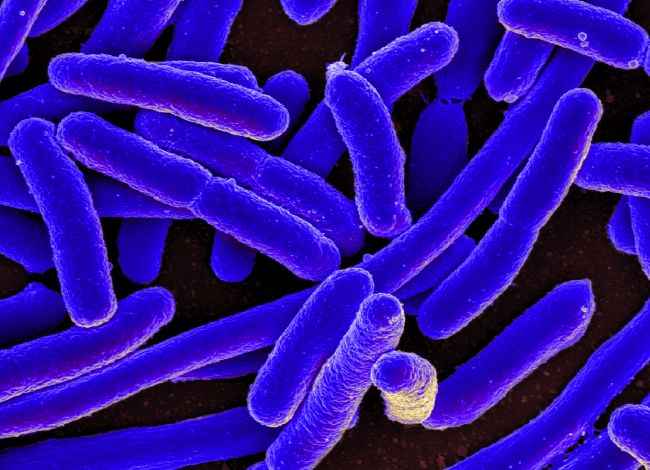
Researchers replaced the DNA in the E. coli bacteria with a DNA that they had made themselves. Instead of the regular 64 codons that occur naturally, the DNA introduced by the researchers had 59 codons. The bacteria managed to reproduce, and create copies of the synthetic DNA. The experiment raised the question, have scientists created artificial life?
By: Group 5
Jhunard Aayas
Yno Battung
Trixie Foronda
Angel Ugalino
Kristine Taruc
Public safety organizations are one of the most important components of any society as they are responsible to provide support and assistance to the community in times of crisis. The employees of such organization however are always exposed to stressful situations and they need to be mentally and emotionally strong to take the challenge, deal with it and help other dependents out of it.
Stress management is a wide spectrum of techniques and psychotherapies aimed at controlling a person's level of stress, especially chronic stress, usually for the purpose of and for the motive of improving everyday functioning. In this context, the term 'stress' refers only to a stress with significant negative consequences, or distress in the terminology advocated by Hans Selye, rather than what he calls eustress, a stress whose consequences are helpful or otherwise.
Stress produces numerous physical and mental symptoms which vary according to each individual's situational factors. These can include physical health decline as well asdepression. The process of stress management is named as one of the keys to a happy and successful life in modern society. Although life provides numerous demands that can prove difficult to handle, stress management provides a number of ways to manage anxiety and maintain overall well-being.
Many practical stress management techniques are available, some for use by health professionals and others, for self-help, which may help an individual reduce their levels of stress, provide positive feelings of control over one's life and promote general well-being. Other stress reducing techniques involve adding a daily exercise routine, spending quality time with family and pets, meditation, finding a hobby, writing your thoughts, feelings, and moods down and also speaking with a trusted one about what is bothering you. It is very important to keep in mind that not all techniques are going to work the same for everyone, that is why trying different stress managing techniques is crucial in order to find what techniques work best for you.
Stress is a normal psychological and physical reaction to the demands of life. A small amount of stress can be good, motivating you to perform well. But multiple challenges daily, such as sitting in traffic, meeting deadlines and paying bills, can push you beyond your ability to cope.
Stress management gives you a range of tools to reset your alarm system. It can help your mind and body adapt (resilience). Without it, your body might always be on high alert. Over time, chronic stress can lead to serious health problems.
Don't wait until stress damages your health, relationships or quality of life. Start practicing stress management techniques today.
Evaluating stress and developing interventions to prevent or decrease its psychological impact to the individual requires an understanding of the identified origin and processes affecting the onset and prevalence of stress in a person. to identify the origin, nature and dynamics of stress and its theoretical foundations must be identified and carefully evaluated.
To further understands the concepts stress evaluation and intervention, it is critical to uncover other perspectives, dimensions, concepts and measures surrounding it.
This is of great concern for public administration authorities as constant exposure to stressful situations leads to development of some kind of psychological disorder among the employees.
7 TIPS FOR MANAGING STRESS
IDENTIFY YOUR TRIGGERS
MANAGE YOUR TIME
HAVE SOME ME TIME
LEARN TO SAY NO
EXERCISE REGULARLY
PRACTICE DEEP BREATHING
GET MORE SLEEP
S. Pastor, L. Talana, K. Areola, C. Gabriel, K. Reynon,
 Do you prefer reading an e-book or a physical version? It might be a surprise, but for most people, old school print on paper still wins.